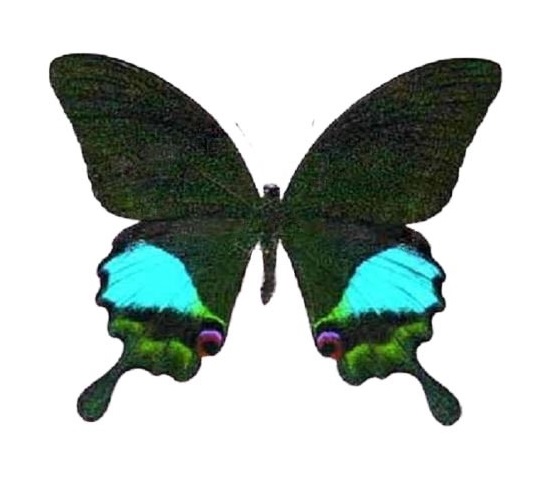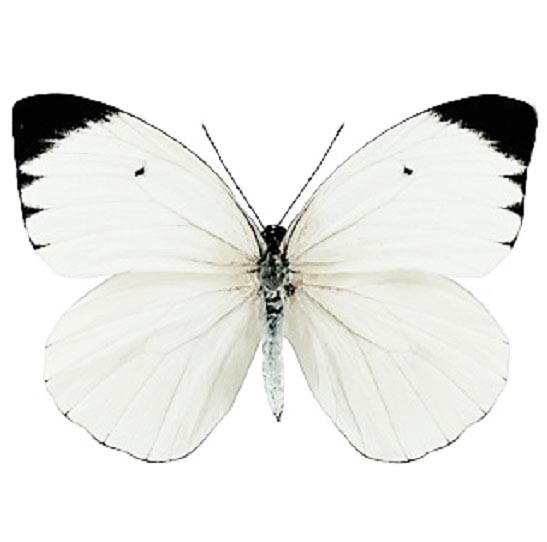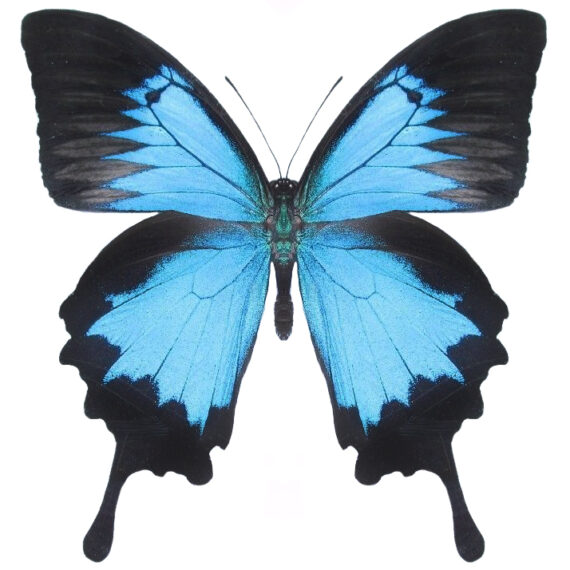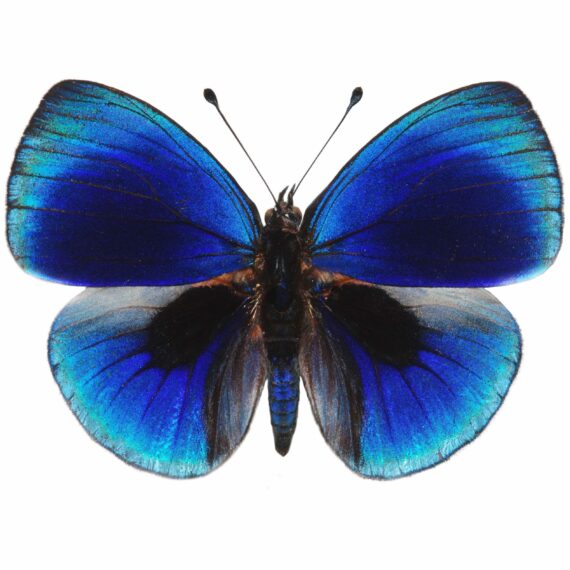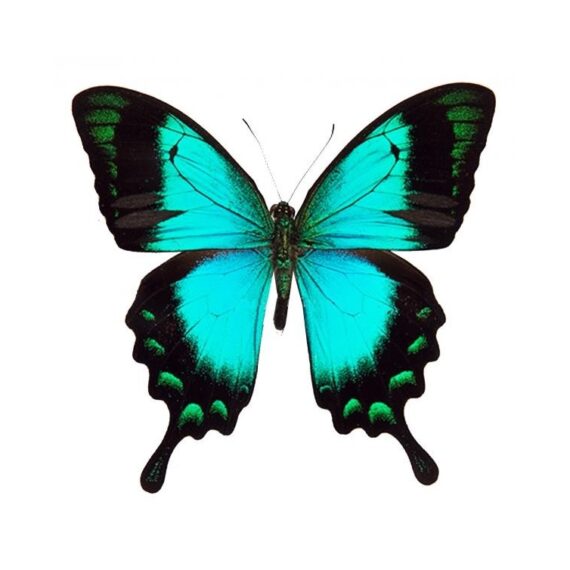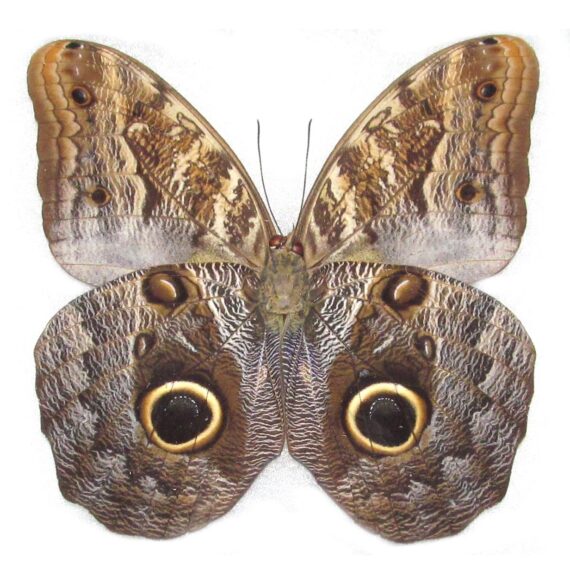
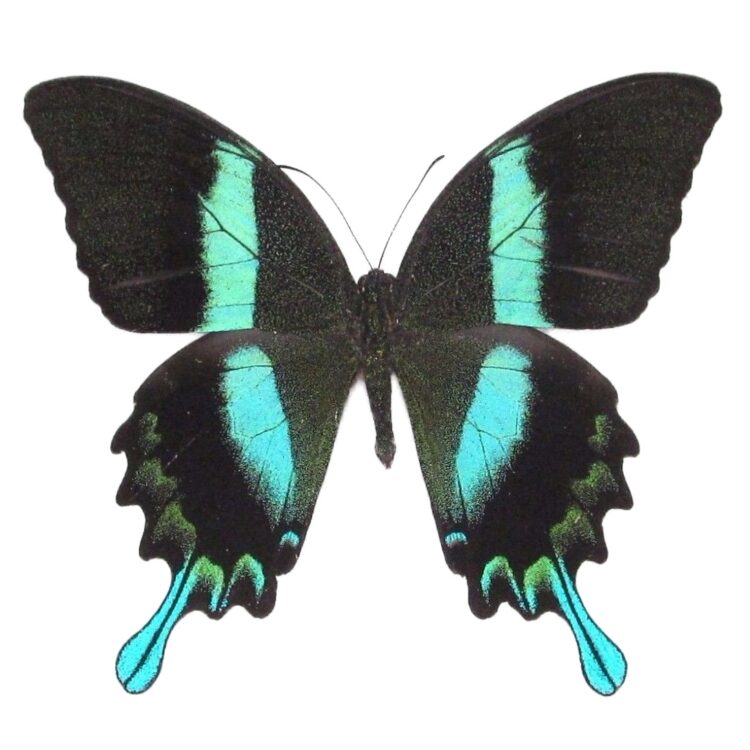
Papilio blumei "Green Peacock" swallowtail blue black butterfly Indonesia

Papilio blumei “Green Peacock” swallowtail blue black butterfly Indonesia

Price range: $34.00 through $88.00

Order Value Discount
$100 - $149 Free shipping
$150 - $499 10% + Free shipping
$500 - $2499 20% + Free shipping
$2500+ 25% + Free shipping

*Special Deal items excluded from order value total

You can get this butterfly papered, pinned or framed
Approximate size of butterfly:

4.5 inch wingspan

Interesting Facts about Papilio blumei:

Also known as the peacock swallowtail, Papilio blumei is native to Indonesia. The iridescent green coloration is not produced by pigments, but is produced by the structure of the scales on the surface of the wing. They refract light and give us blue and yellow reflections, which is perceived by our eyes as being green.

Researchers have taken about 10 years to recreate the surface of a butterfly’s wing and have only come up with a simplified replica so far. They hope such technology will help make paper money and credit/debit cards more difficult to forge. Scientists are also using this technology to create solar panels that are more efficient.

Swallowtail butterflies are large, colorful butterflies that inhabit every continent in the world except for Antarctica. Most are tropical species and there are over 550 different species included in this group.

We have several species of swallowtail here in the United States, and many states have adopted swallowtails as their state butterfly. Papilio machaon oregonius in Oregon, Papilio glaucus in Virginia, Georgia, Delaware, and South Carolina, and Papilio polyxenes in Oklahoma.

Swallowtails have tails on the end of their hindwings, which help them escape predators in the wild. In the hopes that a bird will grab onto their tail, which they don’t need in order to fly, instead of some other part of their wing or body which are more critical for survival, the butterfly has a chance to get away unharmed. The bird “swallows the tail” instead of the butterfly, hence the name “swallowtail”.

Want to learn more about blue swallowtail butterflies and our taxidermy butterflies? Check out our social media! 

Papilio palinurus “Emerald Swallowtail” blue green black butterfly Indonesia

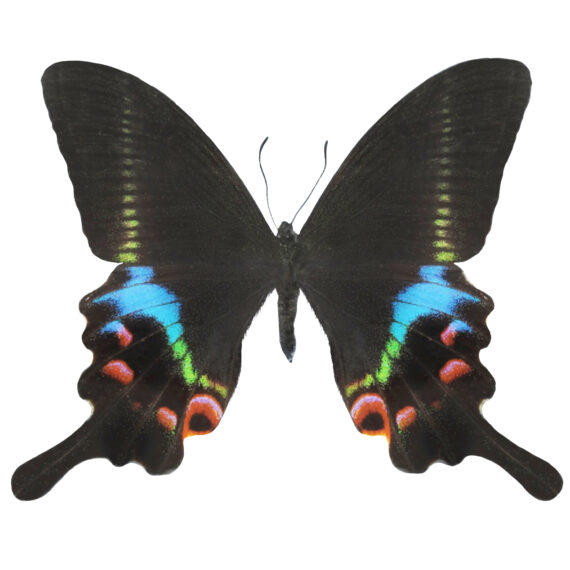
Papilio krishna “Krishna Peacock” blue green pink swallowtail butterfly Vietnam RARE

Papilio maacki SPRING FORM “Alpine Black Swallowtail” blue green butterfly China

Papilio maacki SUMMER FORM “Alpine Black Swallowtail” blue green butterfly China

Papilio bianor “Chinese Peacock Swallowtail” black blue green purple butterfly China

Papilio adamantius “Swift Peacock Swallowtail” blue green black butterfly Indonesia

Papilio lorquinianus “Sea Green Swallowtail” blue black butterfly Indonesia

Papilio phorcas “Apple-Green Swallowtail” green black butterfly Africa

Papilio ulysses “Blue Mountain swallowtail” black butterfly Indonesia

Papilio telegonus swallowtail blue black butterfly Indonesia

Papilio bromius “Broadly Green-Banded Swallowtail” blue black butterfly Africa

Papilio transiens “Sulawesi Machaon” green black swallowtail butterfly Indonesia

Papilio paris “Paris Peacock Swallowtail” blue green butterfly Indonesia

lot of 10 Papilio swallowtail blue green butterfly wings

lot of 20 Papilio swallowtail blue green butterfly wings craft grade

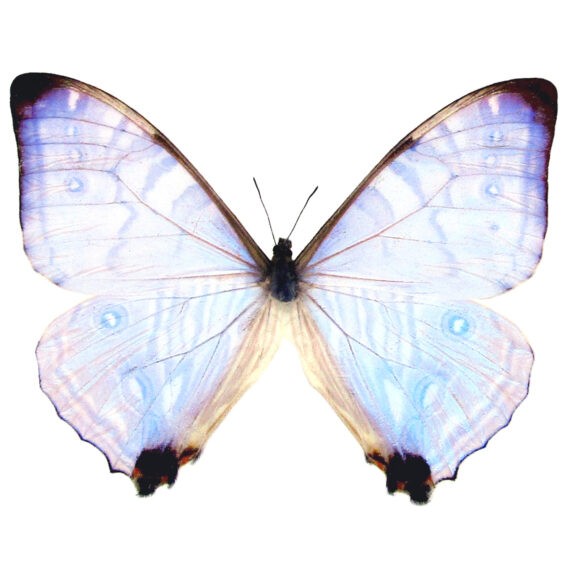
Real butterfly moth wing earrings – choose species

Where do you get them? 

They are raised in butterfly aviaries all over the world. To keep the operations running females are brought in from the wild to lay their eggs inside a large enclosed habitat. This way she and all of her babies are protected from disease, parasites, and predators. One female butterfly can lay thousands of eggs. In the wild only a handful will survive into adulthood because of all of these obstacles. In captivity virtually 100% will survive. Once the butterflies reach adulthood many are released back into the wild to help increase the indigenous populations. The rest are kept in the butterfly house for the rest of their lives, which is only a week or so in most cases, after they hatch from their chrysalis. Museums, universities, and businesses like ours will purchase the deceased specimens to preserve and keep in a collection for the public, to study things like DNA/evolution of a species/mutations/disease, or to make artwork. The money we supply to the butterfly houses helps keep their operation running, which in turn saves the native species of insects and plants from becoming endangered or extinct. This financial incentive motivates governments in third world countries to maintain their natural flora and fauna.

Shipping rates & policies

We ship anywhere within the United States. Once everything is added to your cart shipping will automatically be calculated based on the total weight of the package to your zip code. If your order totals over $100 you become eligible for free standard shipping.

We only ship within the United States and do not currently offer exports to any other country.

Specimen styles
  1. Unmounted butterfly/moth: specimen will come with the wings closed, packaged in a paper envelope, no frame.
  2. Mounted butterfly/moth: specimen will come with the wings spread, pinned in a box with styrofoam, no frame.
  3. Framed: specimen will come in a frame with a glass front and hanger for the back so it can be displayed on your wall.
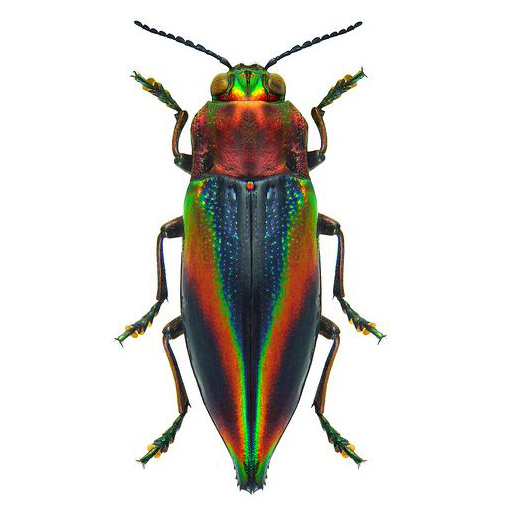
  4. Pinned beetle/bug: specimen will come pinned into a box with styrofoam, no frame.
  5. Packaged beetle/bug: specimen will come packaged, unmounted with the wings closed and legs tucked under the body, no frame.